CAT Mock Analysis Sheet: The Template I Used for 30 Mocks
By Shweta Arora · Published 31 August 2026 · 5 min read · Exam Preparation
Here is the sheet, in full, free to copy. Two tables. One row per mock for the trend, one row per lost question for the diagnosis. I ran this through 30 mocks in 2017 before scoring 99.09 percentile. The second table is the one that did the work.
 Preparing for CAT 2026? Solve 1000+ Free Questions on Percentyl
Here is the sheet, in full, free to copy. Two tables. One row per mock for the trend, one row per lost question for the diagnosis. I ran this through 30 mocks in 2017 before scoring 99.09 percentile. The second table is the one that did the work.
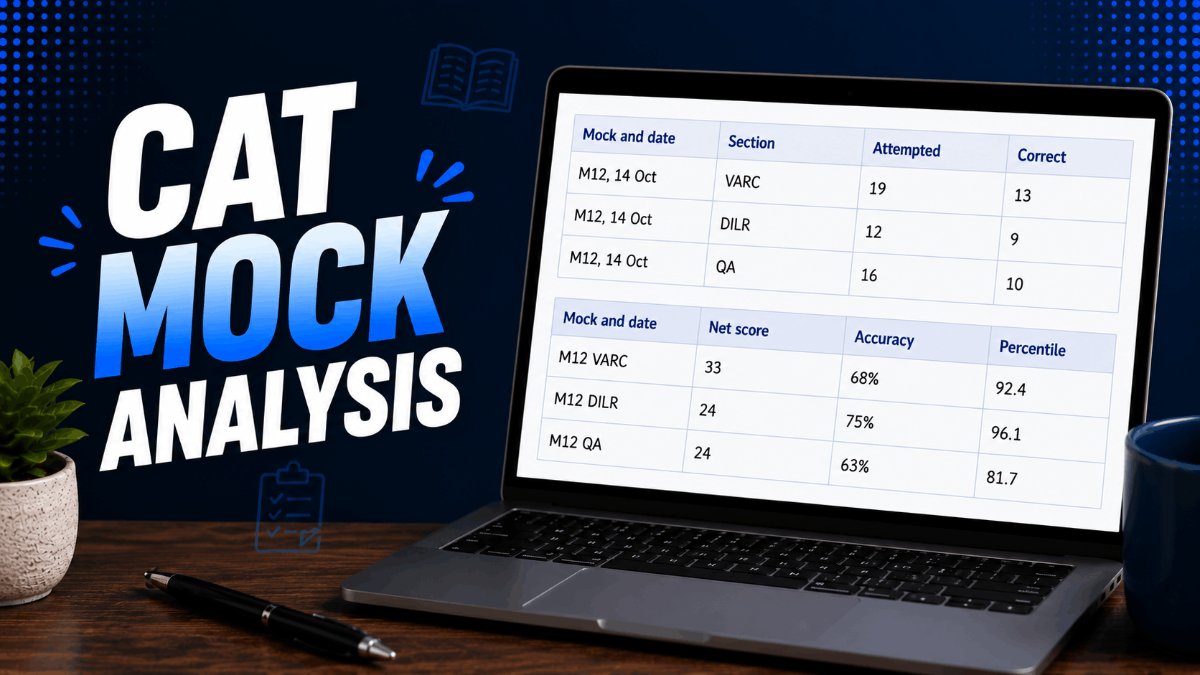
Table 1: the mock log, one row per section
Mock and date | Section | Attempted | Correct |
|---|---|---|---|
M12, 14 Oct | VARC | 19 | 13 |
M12, 14 Oct | DILR | 12 | 9 |
M12, 14 Oct | QA | 16 | 10 |
Mock and date | Net score | Accuracy | Percentile |
M12 VARC | 33 | 68% | 92.4 |
M12 DILR | 24 | 75% | 96.1 |
M12 QA | 24 | 63% | 81.7 |
Three columns carry the whole sheet. Attempts, accuracy, percentile. Net score moves for reasons you cannot control. Accuracy against attempts moves for reasons you can.
Table 2: the loss log, one row per question you did not get
Q no | Topic | Time spent | Loss reason |
|---|---|---|---|
Q7 | Time speed distance | 4:10 | Time sink |
Q11 | Para summary | 1:20 | Silly error |
Q14 | Logarithms | 2:40 | Concept gap |
Q18 | Arrangement set | 6:30 | Wrong selection |
Q21 | Averages | 0:50 | Guessed |
Five loss reasons, no more. The discipline is refusing to invent a sixth.
- Concept gap. You did not know the method. Fixable by studying.
- Silly error. You knew it, you slipped. Fixable by process, not by studying.
- Time sink. You would have got it with more time than it was worth. Fixable by a hard time cap.
- Wrong selection. You should never have opened it. Fixable mainly in DILR, where it is the biggest lever you have.
- Guessed. You had no basis. Only acceptable on a no negative question.
How to read the sheet after each mock
Count the loss reasons. The count tells you what to do next week. It is almost never what you assumed.
If most losses are | The next week is |
|---|---|
Concept gap | Study. Go back to the chapter, not to more mocks |
Silly error | Process. Re-read the question stem twice before solving |
Time sink | Timing. Hard cap of 2 minutes 30 seconds, then move |
Wrong selection | Selection drills. First five minutes of a DILR set, nothing else |
Guessed | Attempt discipline. You are attempting too many |
The reason I kept this sheet for 30 mocks is that my own diagnosis was wrong for the first eight. I thought my Quant was a concept problem. The sheet said 19 of 31 Quant losses were time sinks and silly errors. I had been studying chapters I already knew.
The rules that make the sheet work
- Fill it within 24 hours of the mock. After that you cannot remember why you lost a question, so you write down what sounds reasonable rather than what happened.
- Log every question you got wrong plus every question you skipped after spending more than a minute on it. The skips matter as much as the errors.
- Never log more than one reason per question. If two apply, take the earlier one in the chain. A concept gap that became a time sink is a concept gap.
- Spend twice as long on this sheet as the section took. Forty minutes of DILR earns eighty minutes of review.
- Read the last four mocks together once a month. One mock is noise. Four is a pattern.
What the trend should look like
Percentile is the last thing to move, so do not judge the sheet by it for the first month. Accuracy moves first, then attempts, then percentile.
My own numbers went the way most people's do. Accuracy climbed from the low sixties to the high seventies over about ten mocks while my attempts stayed flat. The score barely moved. Then attempts climbed and the percentile jumped in one go.
If accuracy is flat across six mocks, the sheet is being filled in but not read. That is the common failure, not a lack of mocks.
What does not belong in the sheet
Three things people add that quietly ruin it.
- A feelings column. "Felt rushed" is not a loss reason. It is the sensation of one of the five, so writing it down lets you avoid naming which.
- Questions you got right. Tempting, because it feels productive. It doubles the work and changes nothing you would do differently.
- A target percentile column. It turns a diagnostic tool into a source of dread. Dread is what stops people opening the sheet at all.
One thing worth adding after about ten mocks is a column for whether you have seen the same loss reason on the same topic before. A repeat is worth three fresh entries, because a repeat is the thing you have been failing to fix.
Where to get the mocks to feed it
The sheet needs papers. Every CAT paper from 2020 to 2025 is free at percentyl.in/pyq, 18 full papers with worked solutions, attemptable in the browser with no sign in. Chapter-wise timed tests for the drills the sheet sends you to sit at percentyl.in/mock-tests/topic-tests.
If you want to compare your loss pattern against other aspirants, the threads at percentyl.in/community are the fastest way to find out that your problem is normal.
Frequently Asked Questions
How do you analyse a CAT mock properly?
Log every wrong answer and every long skip against one of five reasons: concept gap, silly error, time sink, wrong selection or guessed. Count the reasons, then let the count decide the next week of study rather than your instinct.
How long should CAT mock analysis take?
About twice the length of the section. Forty minutes of DILR deserves roughly eighty minutes of review. If analysis takes less time than the mock, it is not analysis.
How many CAT mocks should I take?
Twenty to twenty five full length mocks across the cycle is a workable target, with one a week in September, two a week in October and three a week in November.
Why is my mock percentile not improving?
Percentile moves last. Accuracy improves first, then attempts, then score. If accuracy has been flat across six mocks, the analysis is being recorded but not acted on.
Should I analyse a mock the same day?
Within 24 hours. After a day you cannot recall why you lost each question. The loss reasons become guesses, which makes the whole sheet useless.
Frequently Asked Questions
How do you analyse a CAT mock properly?
Log every wrong answer and every long skip against one of five reasons: concept gap, silly error, time sink, wrong selection or guessed. Count the reasons, then let the count decide the next week of study rather than your instinct.
How long should CAT mock analysis take?
About twice the length of the section. Forty minutes of DILR deserves roughly eighty minutes of review. If analysis takes less time than the mock, it is not analysis.
How many CAT mocks should I take?
Twenty to twenty five full length mocks across the cycle is a workable target, with one a week in September, two a week in October and three a week in November.
Why is my mock percentile not improving?
Percentile moves last. Accuracy improves first, then attempts, then score. If accuracy has been flat across six mocks, the analysis is being recorded but not acted on.
Should I analyse a mock the same day?
Within 24 hours. After a day you cannot recall why you lost each question. The loss reasons become guesses, which makes the whole sheet useless.