How to Analyse Any Ad: A Framework for Marketing Interviews
By Shweta Arora · Published 16 August 2026 · 4 min read · Master in Business Administration (MBA)
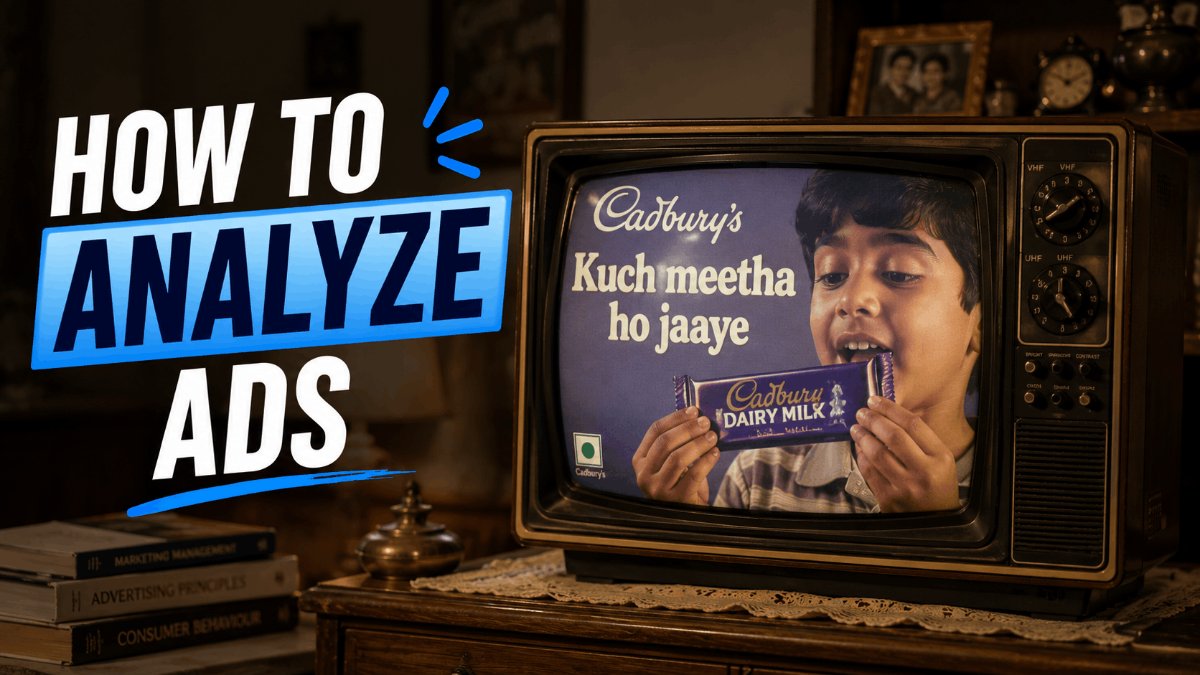
Ad analysis is working out why an ad was made the way it was. A simple seven-part framework covers it: two strategic elements, which are the insight plus the AIDA target, then five tactical ones, which are tone, characters, music, visuals plus message. Learn these and you can break down any ad in a few minutes.
 Preparing for CAT 2026? Solve 1000+ Free Questions on Percentyl
Ad analysis is working out why an ad was made the way it was. A simple seven-part framework covers it: two strategic elements, which are the insight plus the AIDA target, then five tactical ones, which are tone, characters, music, visuals plus message. Learn these and you can break down any ad in a few minutes.
This is a favourite skill for marketing aspirants, because it shows up in summer placement interviews, case competitions plus everyday conversations about brands. There are named frameworks like the 5Ms plus Gunn's principles, but I always kept it simpler. The version below has no fancy name. It just works.
The seven elements at a glance
Element | Type | What to look for |
|---|---|---|
Insight | Strategic | The core objective or truth the ad is built on |
AIDA target | Strategic | Awareness, Interest, Desire or Action |
Tone | Tactical | Fact-based, emotional, humour or testimonial |
Characters | Tactical | Celebrities, common folk or animation |
Music | Tactical | How the sound sets the mood |
Visuals | Tactical | The setting and how the brand is shown |
Message | Tactical | The words that land the insight |
The strategic elements
Insight
Every ad is built to achieve something. The first job is to find that objective, which I call the insight behind the ad. It often takes a little reading about the brand and where it stands in the market. The insight is the why. Everything else in the ad exists to serve it.
AIDA target
Every campaign aims at one of four objectives: Awareness, Interest, Desire or Action, known together as AIDA. Once you know the insight, the AIDA target usually becomes clear. A brand new product tends to chase awareness. A known brand may push for interest or desire instead.
The tactical elements
These are the choices that bring the strategy to life on screen.
Tone
The tone is the mood of the ad: fact-based, emotional, humour or testimonial. It has to match the objective. A new brand chasing awareness often leans fact-based, while an established brand may go emotional to deepen a bond.
Characters
Look at who is in the ad and why. Celebrities, common folk plus animated characters each send a different signal. A new brand often uses a celebrity to borrow attention fast, while a brand that wants people to see themselves in the story uses common folk.
Music
Background music builds suspense, joy or calm, so it should sit with the tone. Watch how it rises or softens across the ad, since a well-timed swell is often what makes a scene stick.
Visuals
Two things are worth watching. First, the setting, because an ad that establishes its world early is easier to follow. Second, brand identification, meaning the small visual cues that plant the brand in your head before the logo even appears.
Message
The words spoken or shown on screen work on the viewer quietly. They should carry the insight so the viewer walks away with the intended thought, not just a nice feeling.
A worked example: the Cadbury Dairy Milk cricket ad
Watch the classic Cadbury ad where a woman runs onto a cricket field to celebrate. Here is how the framework reads it.
Insight: at the time, chocolate was seen as something for kids. Cadbury wanted adults to feel free to enjoy it too.
AIDA target: interest, since the aim was to draw adults toward chocolate as a grown-up indulgence.
Tone: emotional, full of joy, because a well-known brand talking to adults did not need facts or humour.
Characters: common folk, a young woman standing in for the child that lives inside every adult, which makes the viewer picture themselves.
Music: it starts soft plus swells as she dances onto the pitch, peaking with the crowd's cheer.
Visuals: a cricket match sets a familiar scene, with the brand woven in through the story.
Message: the joy on screen says chocolate is a pleasure adults can share.
Run those seven checks and ask whether they pull in the same direction. In this ad they do, which is why it is remembered decades later.
How to practise
Pick one ad a day plus run it through the seven elements. Start with ads you already love, then try ones you find dull to see where the pieces do not line up. Within a few weeks you will read an ad the way a marketer does, which is exactly what interviewers want to see.
Frequently Asked Questions
What is ad analysis?
It is the evaluation of an ad, meaning you work out why it was made the way it was. A simple framework of seven elements, two strategic plus five tactical, lets you break down any ad.
Why does ad analysis matter for MBA aspirants?
It comes up in marketing summer placement interviews, case competitions plus brand discussions. Being able to analyse an ad clearly signals that you think like a marketer.
What is the AIDA framework?
AIDA stands for Awareness, Interest, Desire plus Action, the four objectives an ad campaign can chase. Identifying which one an ad targets is a core part of the analysis.
How do I get better at analysing ads?
Practise on one ad a day using the seven elements: insight, AIDA target, tone, characters, music, visuals plus message. Check whether they all point the same way.
Frequently Asked Questions
What is ad analysis?
It is the evaluation of an ad, meaning you work out why it was made the way it was. A simple framework of seven elements, two strategic plus five tactical, lets you break down any ad.
Why does ad analysis matter for MBA aspirants?
It comes up in marketing summer placement interviews, case competitions plus brand discussions. Being able to analyse an ad clearly signals that you think like a marketer.
What is the AIDA framework?
AIDA stands for Awareness, Interest, Desire plus Action, the four objectives an ad campaign can chase. Identifying which one an ad targets is a core part of the analysis.
How do I get better at analysing ads?
Practise on one ad a day using the seven elements: insight, AIDA target, tone, characters, music, visuals plus message. Check whether they all point the same way.