My Daily CAT Routine: From Coaching to Self-Study
By Shweta Arora · Published 24 June 2026 · 4 min read · Exam Preparation
How I prepared for the CAT exam alongside college: the routine that took me from following coaching to running my own schedule, section by section.
 Preparing for CAT 2026? Solve 1000+ Free Questions on Percentyl
My CAT routine had two clear phases. At first, I leaned on my coaching institute and followed its schedule. Later, I took full control, built my own plan and made my progress measurable. The second phase is what really moved my prep. Here's exactly how both looked, day to day.
A Typical Prep Day
Roughly, once I had my own system, a study day flowed like this.
Time of day | What I focused on |
|---|---|
Early morning | VARC first: a news editorial, then one reading comprehension set |
College hours | Lectures, with quick revision in the gaps |
After college | Focused Quant and DILR practice, topic by topic |
Night | Finish the day's question target, then note what's left |
Phase 1: Leaning on the Coaching Schedule
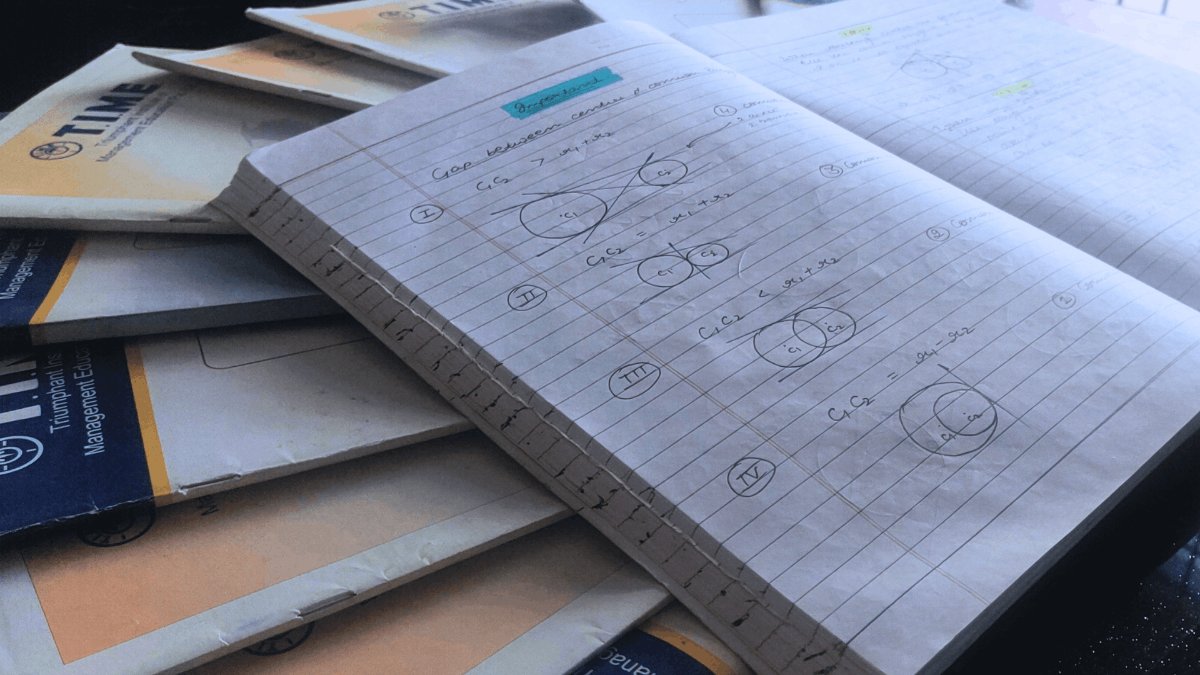
For the first stretch, I did what most people do. I was in college and attending a coaching institute for CAT, so I mostly followed their plan. I went to lectures, did the material and worksheets they handed out, then topped it up with Arun Sharma for Quant plus some geometry notes. For VARC, I read news editorials online.
It worked, up to a point. The problem was that I was following along without ever measuring how much I'd really covered. I wasn't tracking how many questions I'd done per topic, or whether a topic was truly finished. I was busy, but I couldn't have told you if I was on track.
Phase 2: Taking Full Control
The shift came when I stopped outsourcing my plan and built my own. I took charge of all three sections myself and managed the pace across them, instead of letting the class timetable decide for me. This is the phase I'd tell anyone to reach as early as they can.
My mornings became fixed. An alarm, a news editorial, a reading comprehension set, before anything else. Quant and DILR moved into focused self-study blocks with Arun Sharma and my own notes. The day finally had a shape I had chosen.
The Method That Changed Everything: a Daily Question Target
Here's the single change that made the biggest difference. I counted the total number of questions I wanted to do in each topic, then divided that by the number of days I had left. That gave me a clear daily question target.
Suddenly progress was measurable. Instead of a vague "study Quant today", I knew the exact number of questions to clear that day to stay on schedule. Hit the daily number and the syllabus finished itself on time.
How I Tracked Progress
A plan only helps if you follow it, so I kept myself honest. I set reminders on my phone to keep the daily target in front of me, not buried in a notebook.
For revision, I wrote short definitions of the basics for each topic, the kind of thing you can glance at before a practice set. When a topic gave me trouble, I added an extra session for it rather than pretending it was done. The pace stayed mine to adjust.
Section by Section
Here's the short version of what each section needed from me every day.
Section | My daily approach |
|---|---|
VARC | A morning editorial plus one reading comprehension set, every single day |
DILR | Mixed practice sets, focused on spotting the right approach for each |
Quant | Learn the concept, then drill Arun Sharma questions, topic by topic |
The Bottom Line
If I had to compress my whole routine into one line: coaching can start you off, but the real gains came when I took control and made progress measurable. Build a schedule you own, set a daily question target, then track it. The structure matters far more than the raw hours you put in.
Frequently Asked Questions
What did a typical CAT prep day look like?
Mornings were for VARC, a news editorial then one reading comprehension set. College filled the daytime. Evenings went to Quant and DILR. Nights were for finishing the day's question target.
Is coaching necessary for CAT?
It can give you a starting structure, which helped me early on. The bigger jump came when I built my own schedule and stopped relying on the class plan. Structure matters more than the institute. You can use free resources to self-prepare too.
How many hours a day should I study for CAT?
I stopped counting hours and counted questions instead. I set a weekly question target by dividing the questions I wanted to do by the weeks I had left. Hitting that number mattered more than clocking fixed hours.
How did you prepare for VARC in your routine?
Every morning, first thing, I read a news editorial and solved one reading comprehension set. Doing it daily built both reading speed and accuracy over time.
What single habit helped the most?
A weekly question target. Counting the questions per topic, dividing by the weeks left, then holding myself to that number each week. It turned a vague plan into something I could measure.
Frequently Asked Questions
What did a typical CAT prep day look like?
Mornings were for VARC, a news editorial then one reading comprehension set. College filled the daytime. Evenings went to Quant and DILR. Nights were for finishing the day's question target.
Is coaching necessary for CAT?
It can give you a starting structure, which helped me early on. The bigger jump came when I built my own schedule and stopped relying on the class plan. Structure matters more than the institute. You can use free resources to self prepare too.
How many hours a day should I study for CAT?
I stopped counting hours and counted questions instead. I set a daily question target by dividing the questions I wanted to do by the days I had left. Hitting that number mattered more than clocking fixed hours.
How did you prepare for VARC in your routine?
Every morning, first thing, I read a news editorial and solved one reading comprehension set. Doing it daily built both reading speed and accuracy over time.
What single habit helped the most?
A weekly question target. Counting the questions per topic, dividing by the weeks left, then holding myself to that number each week. It turned a vague plan into something I could measure.