NCFM and NISM: Affordable Finance Certificates That Get You Shortlists
By Shweta Arora · Published 24 August 2026 · 5 min read · Master in Business Administration (MBA)
A finance market certificate from NSE or SEBI is one of the cheapest ways to prove finance interest on your CV, plus it helps land finance shortlists at B-schools. Each is an online test you can clear with a couple of weeks of self-study. It gives you something concrete to point to in an interview.
 Preparing for CAT 2026? Solve 1000+ Free Questions on Percentyl
A finance market certificate from NSE or SEBI is one of the cheapest ways to prove finance interest on your CV, plus it helps land finance shortlists at B-schools. Each is an online test you can clear with a couple of weeks of self-study. It gives you something concrete to point to in an interview.
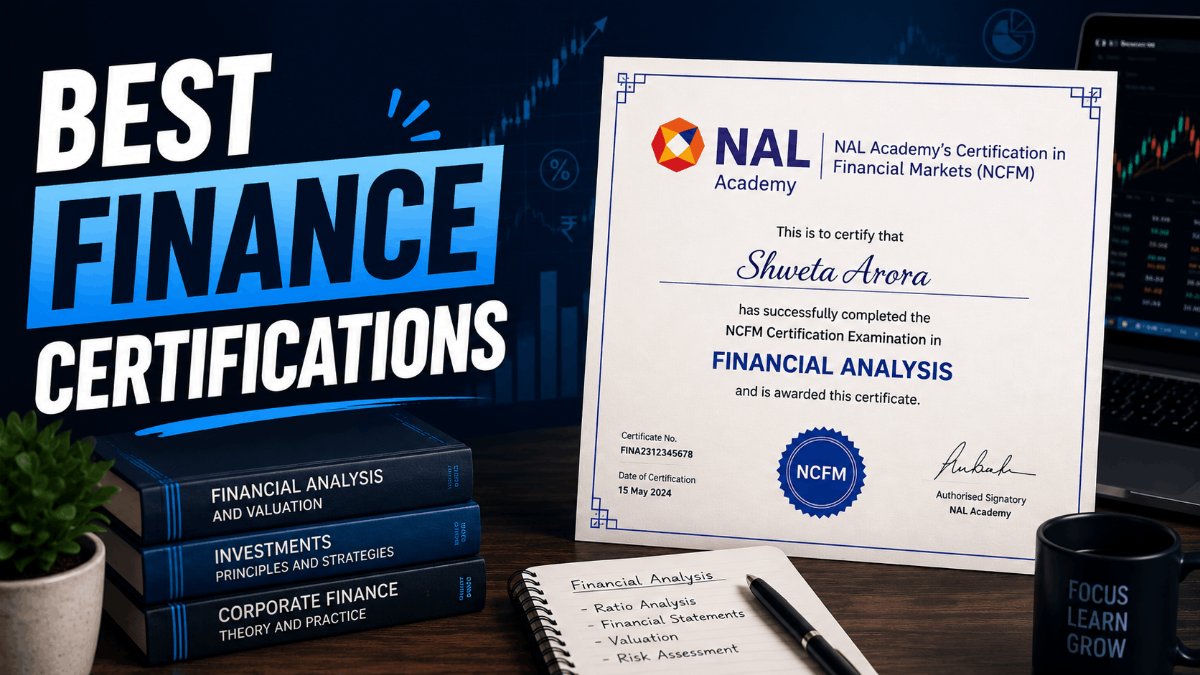
Two names come up here. NCFM is the NSE Academy Certification in Financial Markets, run by the NSE. NISM certifications are run by the National Institute of Securities Markets, which is set up by SEBI, the market regulator. NISM certifications are the ones legally required for several market roles, while NCFM is a wider self-study set. For a student building a profile, either works to show finance intent.
At a Glance
Detail | NCFM and NISM |
|---|---|
Run by | NCFM by NSE Academy; NISM by SEBI's institute |
Who can take it | No age or degree bar, only computer literacy |
When | Book a slot any time of year, online |
Cost | Roughly Rs 1,700 to Rs 3,000 per module (check the site) |
Format | Often 60 to 100 questions in about 2 hours |
Validity | Around 5 years for most modules |
What these certificates are
Both are online tests that check your finance knowledge plus certify that you are equipped for a finance role. In plain terms, they are proof of interest plus basic competence that you can put on a CV. NCFM offers modules across three levels, from foundation to intermediate to advanced, covering areas like capital markets, derivatives plus mutual funds. NISM covers similar ground, with certain modules being mandatory for roles such as research analyst or investment adviser.
Who can take them and what they cost
There is no eligibility bar. No minimum age plus no specific degree. If you can take an online test, you can appear. You book a slot at a time plus centre that suit you, any time of year. Most modules cost somewhere between Rs 1,700 plus Rs 3,000, which is a fraction of what a private finance course charges. Fees plus the module list change, so check the NSE Academy or NISM site for the current details before you register.
The format
Details vary by module, but most are around 60 to 100 questions in roughly two hours, taken on a computer. Many have no negative marking, though a few do, so read the rules for your chosen module. The pass mark is usually 50 percent, plus the score stays valid for about five years. For most students, one well-chosen foundation module is enough to make the point.
How to prepare
These need far less time than people expect. NSE shares study material online for each module, plus a sample paper. Two to three weeks of self-study is usually enough for a foundation module. The sample paper is the single most useful resource, since a good share of the real questions tend to be close to it. Read the material once, work through the sample paper twice plus you are ready.
NCFM or NISM: which to pick
If you want a certificate purely to signal interest for B-school interviews, an NCFM foundation module is the easy start, since the self-study set is wide plus beginner-friendly. If you are eyeing a specific market role, so research analyst, mutual fund distribution or investment advice, pick the matching NISM module, because those are the ones the industry and regulator require. Many students do one of each over time. There is no need to rush through several at once.
How they help your profile
The payoff shows up at B-school interviews plus finance shortlists. For a fresher with a commerce or non-finance background, a finance certificate is a clean signal of interest that sets you apart from classmates with nothing to show. It also gives the interviewer something specific to ask about, which is a chance to talk about a subject you have just studied. Students regularly report being asked about these certificates in IIM interviews plus summer placements, so the small fee tends to pay for itself. One word of caution: a certificate proves interest, not mastery. Be ready to back it up if an interviewer digs into the concepts, since a badge you cannot explain does more harm than good.
Frequently Asked Questions
What is the difference between NCFM and NISM?
NCFM is run by NSE Academy as a wide self-study certification set. NISM is run by SEBI's institute. Several of its modules are legally required for specific market roles. Both work to show finance interest on a CV.
Are NCFM or NISM certificates worth it for MBA aspirants?
Yes, especially for freshers from non-finance backgrounds. They are cheap, quick to clear plus give you a concrete finance credential that helps with B-school finance shortlists and gives interviewers something to ask about.
How much do these certificates cost?
Most modules run roughly Rs 1,700 to Rs 3,000. Fees and the module list change over time, so confirm on the NSE Academy or NISM website before you book.
How long does it take to prepare?
About two to three weeks of self-study for a foundation module. Use the official study material plus the sample paper, which mirrors many of the real questions closely.
Which module should a beginner take?
A foundation module such as a capital markets or financial markets beginner module is enough to signal interest. Pick one that matches the finance area you are most drawn to.
Frequently Asked Questions
What is the difference between NCFM and NISM?
NCFM is run by NSE Academy as a wide self-study certification set. NISM is run by SEBI's institute. Several of its modules are legally required for specific market roles. Both work to show finance interest on a CV.
Are NCFM or NISM certificates worth it for MBA aspirants?
Yes, especially for freshers from non-finance backgrounds. They are cheap, quick to clear plus give you a concrete finance credential that helps with B-school finance shortlists and gives interviewers something to ask about.
How much do these certificates cost?
Most modules run roughly Rs 1,700 to Rs 3,000. Fees and the module list change over time, so confirm on the NSE Academy or NISM website before you book.
How long does it take to prepare?
About two to three weeks of self-study for a foundation module. Use the official study material plus the sample paper, which mirrors many of the real questions closely.
Which module should a beginner take?
A foundation module such as a capital markets or financial markets beginner module is enough to signal interest. Pick one that matches the finance area you are most drawn to.