The CAT Revision System That Makes Practice Stick
By Shweta Arora · Published 23 August 2026 · 4 min read · Exam Preparation
All your CAT practice is wasted if you cannot revise it fast as the exam nears. The fix is simple: decide now what you will revise, capture it in two or three dedicated logs plus revise on a fixed rhythm. You only ever revise what you set aside for revision, so set it aside from day one.
 Preparing for CAT 2026? Solve 1000+ Free Questions on Percentyl
All your CAT practice is wasted if you cannot revise it fast as the exam nears. The fix is simple: decide now what you will revise, capture it in two or three dedicated logs plus revise on a fixed rhythm. You only ever revise what you set aside for revision, so set it aside from day one.
CAT is a test of endurance long before exam day. My own preparation ran about a year and a half. Had I not planned my revision from the start, going back through every book plus mock near the end would have been impossible. This is the system that made it manageable.
The three questions to answer
Revision planning comes down to three things: what to revise, how to note it down plus how often to go back to it. Get these right early plus the final months feel calm instead of frantic.
What to revise
Five parts of the CAT syllabus need revision. Important formulas from every chapter, which you meet while reading the basics, solving question sets plus analysing mocks. Tricks and shortcuts you pick up from solutions, like a quick way to handle a seating-arrangement set. Introductory concepts, the basics at the start of each chapter. Standout questions, the unique ones that make you think oh, I would not have seen it that way. And your Golden Book of common squares, cubes, tables plus fractions for fast mental maths.
How to capture it
How you take notes decides how easy revision is later. Keep three logs.
A Formula Book
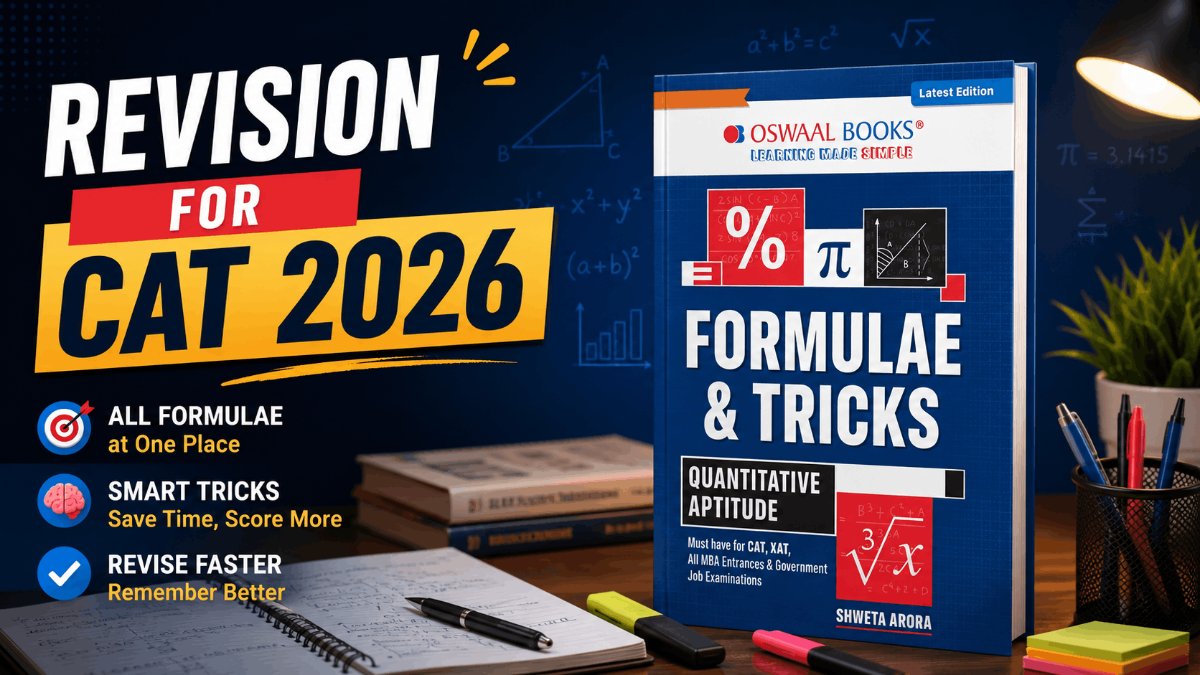
Use one notebook or a ready-made formula book for three of the five items: important formulas, tricks and shortcuts plus standout questions. Divide it by chapter, so you are never flipping through hundreds of pages to find them. After you finish a chapter, leave a few blank pages, since mocks will throw up more to add later.
A Golden Book
Keep a small separate diary for the squares, cubes, tables plus fractions. It sits apart from the Formula Book because you will pick it up far more often, in spare minutes rather than study sessions. Build it once at the start plus it pays back all year.
Marked-up prep books
As you solve from any book, highlight the key concepts plus the standout questions. Pencil the trick next to a question where it helps. Mark the question number so you can find it fast in the final revision. This turns a fat book into something you can skim in an evening.
How often to revise
Different material needs a different rhythm. Here is a simple schedule that works.
Revision type | When | What to revise |
|---|---|---|
At disposal | Any spare minute, like a commute | The Golden Book, for calculation speed |
Weekly | One slot each weekend | The week's new Formula Book entries |
Monthly | Once a month | The full Formula Book, chapter by chapter |
Before a mock | The evening before | Tricks and standout questions, to keep them fresh |
The mistake to avoid
The most common revision mistake is passive re-reading. Running your eyes over old notes feels productive plus teaches you almost nothing. Revision has to be active. Cover the answer plus try to recall the formula. Redo a standout question on a blank sheet instead of reading its solution. If you cannot reproduce it, it is not revised yet. This is the difference between recognising something plus being able to pull it out under time pressure, which is all the exam cares about.
The second mistake is leaving revision until the syllabus is done. It never fully feels done. Revise what you have finished while you learn the rest, so the early chapters do not fade by November. Little and often beats one heroic sweep at the end.
Make it a habit early
The people who revise well are not the ones who cram at the end. They are the ones who set up these logs in month one plus keep them current. Start your Formula Book plus Golden Book today, even if your basics are not done. A month of small, steady revision beats a panicked marathon in November. It is the difference between knowing a concept plus recalling it when the clock is running.
Frequently Asked Questions
Why is revision so important for CAT?
Practice only helps if you can recall it under pressure. Without a revision plan you cannot realistically go back through every book and mock near the exam, so the effort leaks away. Planned revision locks it in.
What should I keep in my Formula Book?
Three things, organised by chapter: important formulas, tricks and shortcuts plus the standout questions with unique approaches. Leave blank pages after each chapter for additions from mocks.
How often should I revise for CAT?
On four rhythms: the Golden Book in spare minutes, new notes weekly, the full Formula Book monthly plus tricks and standout questions the evening before each mock.
When should I start planning revision?
From day one. You only revise what you set aside, so build your Formula Book and Golden Book at the start and keep them current, rather than trying to create them near the exam.
Frequently Asked Questions
Why is revision so important for CAT?
Practice only helps if you can recall it under pressure. Without a revision plan you cannot realistically go back through every book and mock near the exam, so the effort leaks away. Planned revision locks it in.
What should I keep in my Formula Book?
Three things, organised by chapter: important formulas, tricks and shortcuts plus the standout questions with unique approaches. Leave blank pages after each chapter for additions from mocks.
How often should I revise for CAT?
On four rhythms: the Golden Book in spare minutes, new notes weekly, the full Formula Book monthly plus tricks and standout questions the evening before each mock.
When should I start planning revision?
From day one. You only revise what you set aside, so build your Formula Book and Golden Book at the start and keep them current, rather than trying to create them near the exam.