How to Land a Research Internship Under an IIM Professor
Published 14 August 2026 · 4 min read · Indian Institute of Management
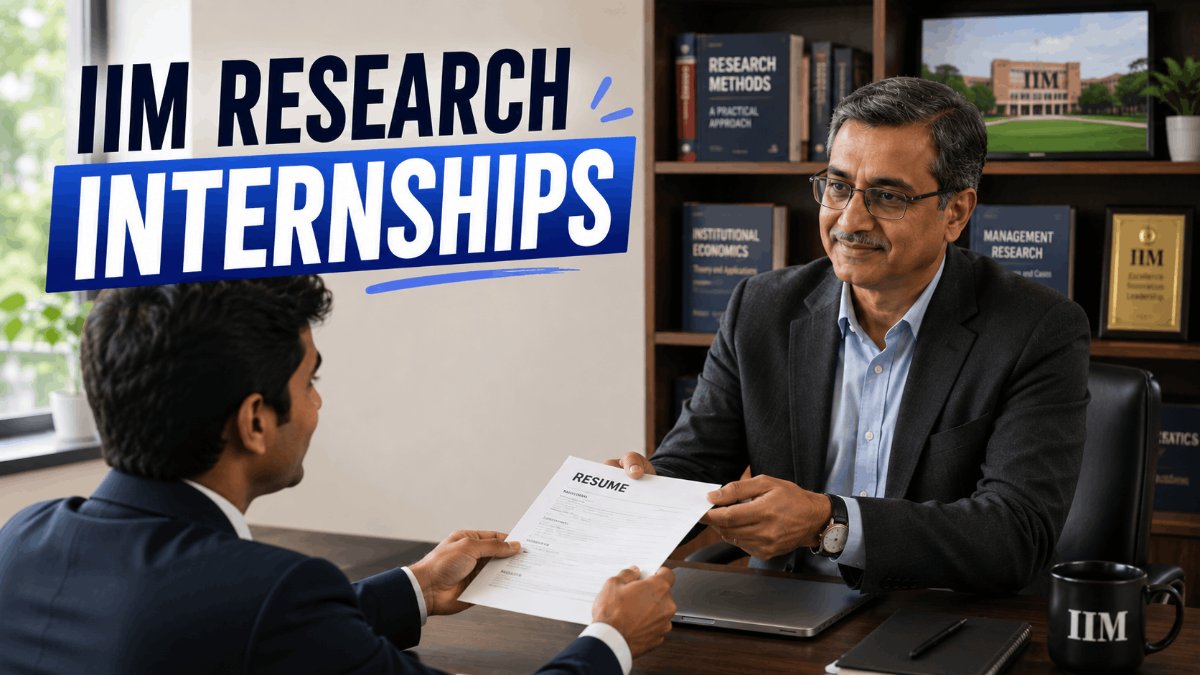
You do not need to be at a top college to intern under an IIM professor. The path is simple to describe: email a lot of professors with a tailored note, show you have read their work plus clear one interview, which is often a discussion of a paper they send you. Persistence matters more than pedigree here.
 Preparing for CAT 2026? Solve 1000+ Free Questions on Percentyl
You do not need to be at a top college to intern under an IIM professor. The path is simple to describe: email a lot of professors with a tailored note, show you have read their work plus clear one interview, which is often a discussion of a paper they send you. Persistence matters more than pedigree here.
This is one of the best profile-building moves for an undergraduate, especially if you are at a tier-2 or tier-3 college where campus recruiters rarely visit. A research stint under an IIM faculty member gives you real work to talk about plus a strong line on your CV. I have seen students from lesser-known colleges do exactly this and use it to stand out later.
At a Glance
Question | Short answer |
|---|---|
Who can apply | Undergraduate students, including those from tier-2 and tier-3 colleges |
When | Summer or winter breaks, usually one to two months |
How to apply | Email professors directly with a tailored cover letter and CV |
How many to email | Often 40 to 50 or more, since many will not reply |
Selection | Usually a single interview, sometimes on a research paper they share |
The work | Gathering data, running interviews, helping build a case study |
Why a research internship is worth it
Campus hiring passes over a lot of capable students at smaller colleges. A research internship is a way around that gate. You get to do real academic work, see how rigorous thinking is done plus earn a reference from a respected professor. For anyone aiming at an MBA later, it also shows genuine interest in management, which reads well on an application.
Find the right professors
Start with your own interest. Pick a field you have studied or read about, then look up professors working in that area across the IIMs plus other good institutes. You do not need heavy filters. Apply widely, because reply rates are low. Sending 40 to 50 emails, sometimes ten at one institute, is normal. Adjust the number based on how well known your college is plus what else is on your CV.
Write a cover letter that gets opened
This is where most students lose the chance. A generic letter goes straight to the bin. Address the professor by name, so Dear Prof. Sharma, not Respected Sir. Mention the courses you have done that fit their field. Then show you have read their recent papers plus give a short view on one of them. That single move tells a professor you are serious. It separates you from the mass of copy-paste emails.
Keep the CV simple
Your CV does not need to be fancy. A clean, professional one-pager is enough. List your education, any projects plus the courses relevant to the professor's work. Skip the design flourishes. The cover letter does the persuading, the CV just backs it up.
The wait, then the reply
Expect silence from most professors. Many are travelling or busy with non-teaching work over the breaks, so no reply is not a rejection of you. Some will say they are not taking interns this cycle. A yes can take a week or more to arrive. A single polite follow-up after a week is fine. Do not send a string of reminders.
The interview
There is usually just one interview, which can be over a call. A common format is that the professor sends you a research paper, sometimes a well-known one, then asks you to explain its findings. It is fine if the topic is new to you. Prepare hard using videos, articles plus the paper itself. Bring real examples. Professors care more about how you think plus how willing you are to learn than about what you already know.
What the work looks like
Research internships are exactly that, research. You might gather background data, run online or offline interviews plus help turn the findings into a case study. Some of the data may be confidential, so you may not be able to share the details later. The value is in the skills you build plus the way you learn to work through a problem carefully.
Frequently Asked Questions
Can I get an IIM research internship from a tier-2 or tier-3 college?
Yes. Selection is based on your interest, your tailored application plus one interview, not on your college brand. Students from lesser-known colleges do this regularly to strengthen their profiles.
How many professors should I email?
Usually 40 to 50 or more, since many will not reply. Send tailored emails, not one mass message. Adjust the number based on your college and your existing experience.
What should my cover letter include?
Address the professor by name, list the courses relevant to their field plus show you have read their recent papers by giving a short view on one. A tailored letter is what gets a reply.
What happens in the interview?
Often the professor sends you a research paper and asks you to explain its findings over a call. Prepare thoroughly even if the topic is new. Focus on showing clear thinking plus willingness to learn.
When do research internships happen?
Mostly during summer or winter breaks, usually for one to two months. Apply a couple of months ahead, since replies and scheduling take time.
Frequently Asked Questions
Can I get an IIM research internship from a tier-2 or tier-3 college?
Yes. Selection is based on your interest, your tailored application plus one interview, not on your college brand. Students from lesser-known colleges do this regularly to strengthen their profiles.
How many professors should I email?
Usually 40 to 50 or more, since many will not reply. Send tailored emails, not one mass message. Adjust the number based on your college and your existing experience.
What should my cover letter include?
Address the professor by name, list the courses relevant to their field plus show you have read their recent papers by giving a short view on one. A tailored letter is what gets a reply.
What happens in the interview?
Often the professor sends you a research paper and asks you to explain its findings over a call. Prepare thoroughly even if the topic is new. Focus on showing clear thinking plus willingness to learn.
When do research internships happen?
Mostly during summer or winter breaks, usually for one to two months. Apply a couple of months ahead, since replies and scheduling take time.